Made by hand in Somerset

Sourdough Starter Kits
for every kind of baker.

Five sourdough starter kits made by hand in Somerset. Each kit ships with a live, mature starter culture, the right vessel for fermentation, organic flour for activation, and a clear printed guide. Choose by grain — classic white, wholegrain, ancient spelt, deep dark rye, or our pared-back mini kit for the curious beginner.

5 products available
More kits coming soon
The guide

Everything you need to know about
sourdough starter kits.

What is a sourdough starter kit?
01 — The kit

What is a sourdough starter kit?

A sourdough starter kit is a thoughtfully assembled box that gives you everything you need to raise a starter from scratch and bake your first proper loaf at home.

At its core sits a live, active sourdough starter culture — a small population of wild yeasts and lactic acid bacteria, suspended in a flour-and-water medium, ready to wake up the moment you give it its first feed. Around that culture, a good kit puts the right vessel for fermentation, a measure of organic flour to feed it through its first week, and a clear printed guide to walk you through the rhythm.

We make five distinct sourdough starter kits at The Sourdough Hub, each built around a different grain — classic white, wholegrain, ancient spelt, deep dark rye, and a pared-back mini option for the curious beginner.
How sourdough <em>starters are made.</em>
02 — The science

How sourdough starters are made.

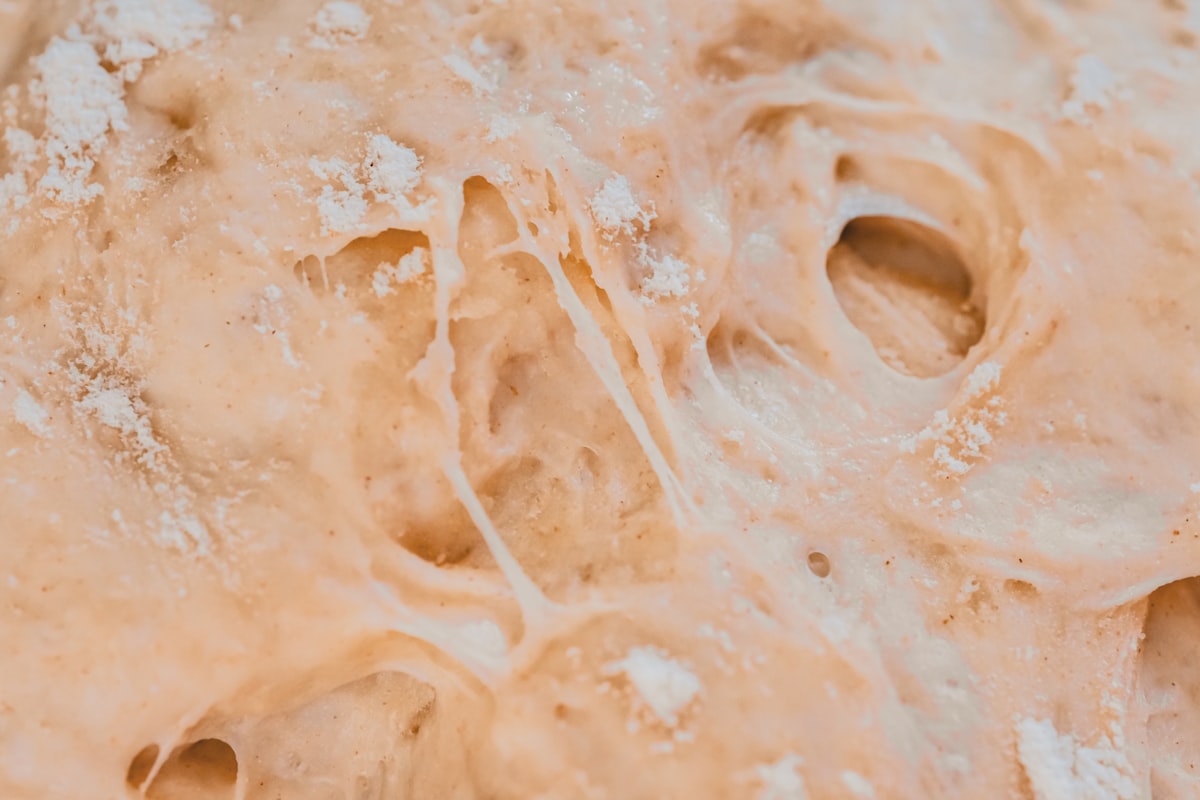
A sourdough starter is, fundamentally, a wild fermentation. Unlike commercial baker's yeast — a single isolated strain of Saccharomyces cerevisiae, grown in a factory and dried for shelf stability — a sourdough culture contains a complex community of organisms that establish themselves naturally from the flour, the water, the air, and the surfaces around them.

Wild yeasts and various species of lactobacilli coexist in a stable, slightly acidic environment they shape together: the yeast produces carbon dioxide that lifts the dough, and the bacteria produce lactic and acetic acids that give sourdough its characteristic tang and digestibility.

Building a starter from flour and water alone takes seven to fourteen days. Our kits ship with a live mature culture that's been continuously fed for years in our Somerset kitchen — activation takes three days, not three weeks, and the result is far more reliable. Once active, a starter can be kept indefinitely. Ours has been in continuous culture since 2014.

Why sourdough <em>matters.</em>
03 — Why it matters

Why sourdough matters.

The argument for sourdough isn't simply that it tastes better, although it does. The long, slow fermentation that gives sourdough its complexity also breaks down some of the proteins and carbohydrates that can make modern industrial bread harder to digest.

Studies on sourdough fermentation have demonstrated reductions in FODMAPs, a rise in the bioavailability of certain minerals, and a lower glycaemic response than yeasted bread of similar composition.

For people without coeliac disease but with a sensitivity to commercial bread, properly fermented sourdough is often considerably easier on the gut. Beyond the science: sourdough rewards attention. It's the kind of bread you make consciously, which makes you more conscious of the bread you eat.

A <em>brief</em> history.
04 — The history

A brief history.

Sourdough is the oldest leavened bread we have evidence of, and it predates commercial yeast by roughly six thousand years. Egyptian bakers around 4000 BCE were producing sourdough loaves — some of them recognisable to a modern eye — using cultures captured from their own kitchens.

The technique spread throughout the Mediterranean and into Europe, where for several millennia it was simply how bread was made. The arrival of commercial baker's yeast in the late 19th century changed that quickly: factory yeast produces a faster, more predictable rise, and bread became cheaper.

Sourdough survived in pockets — San Francisco's gold rush bakers famously kept cultures alive in canvas bags slung around their necks — but for most of the 20th century it was a curiosity. The home sourdough revival of the last twenty years, accelerated by the pandemic, has put it back where it began: in domestic kitchens, made by hand, fed by attention.

How to use <em>your starter kit.</em>
05 — Using your kit

How to use your starter kit.

Every kit ships with a printed beginner's guide — the full method is there. The short version:

Day one: mix the live culture with a small amount of flour and water, stir, cover loosely, and leave it somewhere warm.
Day two: discard half and feed at the same time.
Day three: the starter should be visibly bubbling and smelling pleasantly tangy — ready for its first loaf, or for the fridge for weekly maintenance.

For a basic loaf: 100g of active starter, 500g of strong bread flour, 350g of water, 10g of salt. Knead, rest, fold, shape, prove, bake. The full method is in the kit booklet and on our journal, where you'll find recipes for everything from a classic white loaf to discard flatbreads, sandwich rye, and a sourdough pizza base.

New to sourdough entirely? Start with our 30-day beginner guide — the article we wish someone had handed us fifteen years ago.

Common questions

Sourdough Starter Kits — your questions, answered.

What exactly is a sourdough starter kit?

A sourdough starter kit gives you everything you need to begin baking sourdough at home: a live, active starter culture, a vessel to keep and feed it in, organic flour for the first activation and feeds, and a printed step-by-step guide. Our kits ship with a mature culture so you can be baking within a week, instead of spending the usual two weeks growing one from scratch.

How long does it take to make a sourdough starter from a kit?

Three days from delivery to active starter. Most home bakers are baking their first loaf within five to seven days. Without a kit, growing a starter from flour and water alone usually takes ten to fourteen days, and is far less reliable.

Are sourdough starter kits suitable for beginners?

Yes — they are designed for them. Our kits include a printed guide written specifically for first-time bakers, with troubleshooting at the back. The live culture removes the most failure-prone step (growing a starter from scratch), so a beginner can focus on learning to bake the bread itself.

Can a sourdough starter from a kit really stay alive forever?

Effectively, yes. With weekly feeds it will live indefinitely. Our own kitchen culture has been continuously fed since 2014. Many home starters have been passed down through generations — some San Francisco bakeries trace theirs to the gold rush of the 1850s.

What's the difference between the white, wholegrain, spelt, and rye kits?

The starter culture in each kit has been fed exclusively on that grain, which gives each one a distinct character. White is the mildest and most beginner-friendly. Wholegrain is fuller-flavoured and ferments slightly faster. Spelt is gentle, with a buttery note. Dark rye is fast, sour, and produces deeply traditional Northern European loaves.

Is sourdough healthier than regular bread?

For most people, yes — particularly compared to industrial supermarket bread. Long fermentation reduces FODMAPs, increases mineral bioavailability, and produces a lower glycaemic response. People with coeliac disease should not eat sourdough made with wheat, spelt, or rye, however; the gluten content is reduced but not eliminated.

Do sourdough starter kits come with everything I need to bake?

Our full kits (white, wholegrain, spelt, dark rye) include a live starter, a glass storage jar, a ceramic mixing jug, organic flour for activation and the first two feeds, and the printed guide. You'll need additional flour to bake your first loaves; the guide explains what to buy. The Mini Kit includes the starter, flour, and guide only — designed for bakers who already have basic kit at home.

How do I use my sourdough starter once it's active?

Take 100g of active starter at peak (about four hours after a feed), mix with 500g of bread flour, 350g of water, and 10g of fine sea salt. Knead briefly, rest for an hour, fold and rest a few more times, shape, prove for eight to twelve hours, and bake at 230°C in a Dutch oven. The full method, with timings, is in the booklet that ships with every kit. Recipes for variations are on our journal.

What flour should I use to feed my sourdough starter?

Match the flour to the starter. A white starter prefers strong white bread flour. A wholegrain starter prefers wholemeal. Spelt and rye starters prefer their own grain. You can deviate occasionally — a small amount of rye in a white feed gives a flavour boost — but the long-term character of the starter is shaped by what you feed it.

How long does delivery take, and what if my starter arrives late?

We dispatch within one to two working days; standard UK delivery then takes two to three days. The starter ships in a cool-safe paper liner and can survive a four-day delay without issue. If your kit takes longer than seven working days from order, contact us and we'll send a replacement free of charge.